
A conservative guide to daily violin care: cleaning, humidity, strings, bridge and bow, and when to bring the instrument to a workshop.
Daily violin care is simple. Wipe the instrument with a dry, soft cloth after playing, keep it in its case when not in use, keep the case away from heat and dryness, and leave everything else to a luthier. This guide explains each of those habits, and what not to do.
After each session, wipe rosin dust off the top, the strings and the fingerboard with a clean, dry microfibre or cotton cloth. Use one cloth for the varnished surfaces and a separate one for the strings. That is the whole routine. Done daily, it prevents nearly every cleaning problem an instrument can develop.
Do not use water, soap, household cleaners, solvents or alcohol on any part of the instrument. Violin varnish is soft, thin and irreplaceable, and it is easily damaged by liquids that are harmless on furniture. Some players clean strings with alcohol; a single drip onto the varnish can leave permanent damage, so we advise a dry cloth only.
Used rarely and correctly, a purpose-made violin polish is not dangerous, but it is rarely necessary, and many products leave residues that complicate future restoration work. If rosin has built up and hardened, or the varnish looks dull, have the instrument cleaned professionally rather than working on it yourself. A workshop clean is inexpensive compared with retouching damaged varnish.
Wood moves with moisture. Sudden dryness is the most common cause of open seams and cracks, and prolonged damp swells the plates and can unsettle the setup. Keep the instrument at moderate, stable humidity, roughly 40 to 60 per cent, and away from radiators, sunny windowsills and car interiors. In centrally heated rooms in winter, a case humidifier earns its keep, and a small hygrometer in the case tells you whether you need one.
Wipe the strings after playing and replace them when they sound dull or no longer tune truly. For a regular player that typically means once or twice a year, though it varies with playing time and string type. When changing a full set, replace the strings one at a time so the bridge and soundpost stay under tension.
Tuning gradually pulls the top of the bridge towards the fingerboard. Glance at it when you change strings: it should stand straight, not lean. If it looks tilted or warped, do not force it back yourself. Adjusting a bridge takes a luthier a minute, and a falling bridge can take the soundpost with it.
Check that the rubber feet of your shoulder rest are intact, since worn feet can expose metal to the varnish. Always remove the shoulder rest before closing the case. Case lids pressing on a fitted shoulder rest cause a surprising number of cracked tops. Make sure nothing loose, including mutes and pencils, can move around inside the case.
Loosen the bow hair after playing, apply rosin in moderation, and avoid touching the hair with your fingers. When the bow stops gripping evenly or the hair has stretched, book a rehair.
Once a year is a sensible rhythm for a check of the setup, fittings and seams, or sooner if the sound changes, something buzzes, a seam clicks or a crack appears. A stable, healthy instrument does not need setup work every few months.
If anything here feels uncertain, ask. Conservative care costs little. Undoing well-intentioned mistakes is what gets expensive.
MyLuthier was started by two friends while they were studying at the Royal Academy of Music in London. The idea was to provide musicians with exceptional instruments at a price they can afford. We travelled Europe in search for the best contemporary makers and we’re proud of our selection and the partnerships we’ve developed.
Unearth the complexities of violin bow rehairing, from sourcing horsehair to precise rehairing processes and explore expert services at MyLuthier!
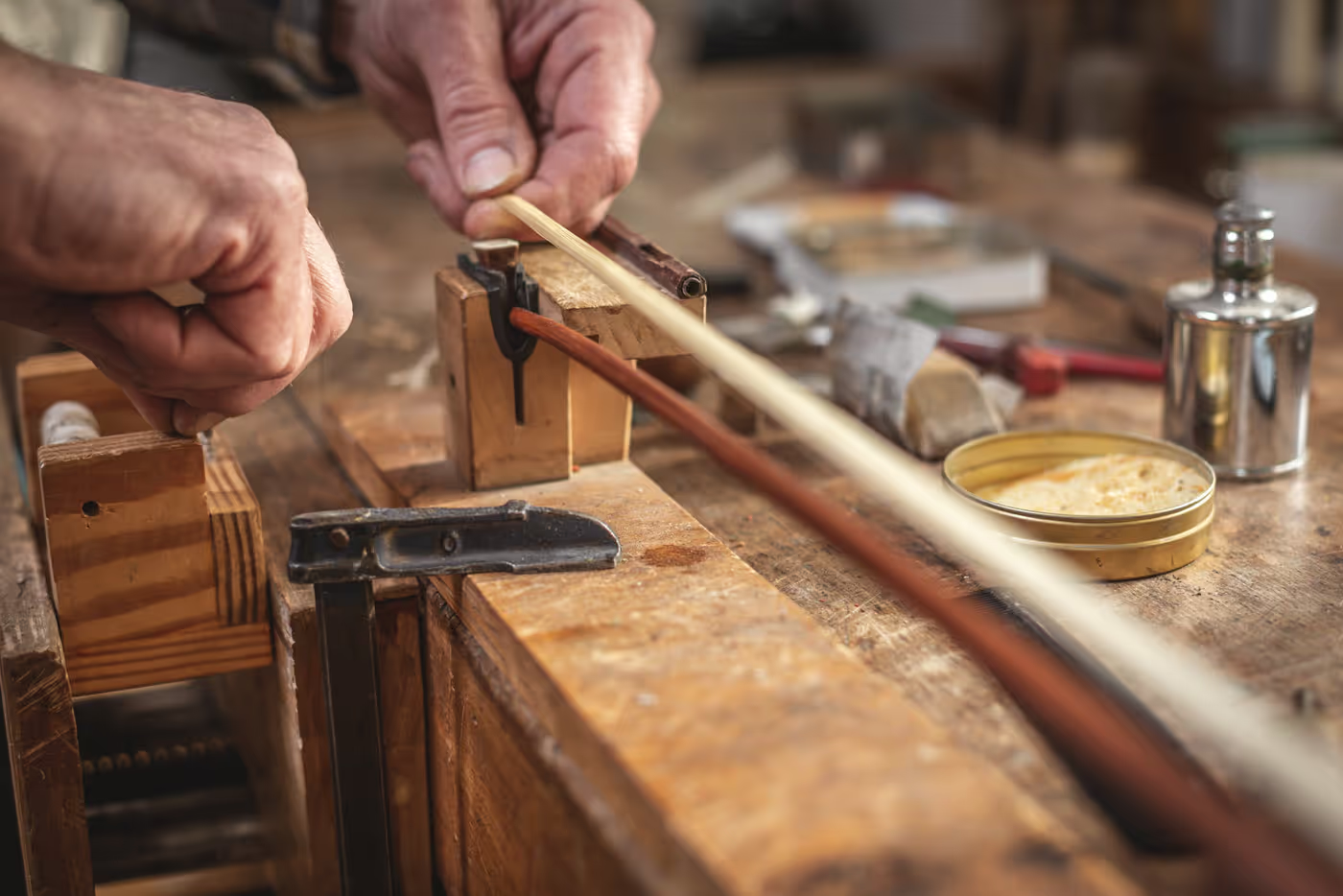
Understanding violin restoration: Assess your instrument's condition, explore its historical value, calculate restoration costs, and appreciate the potential value increase. Consider personal and practical aspects, and explore the professional services offered by MyLuthier.

Here are some of our favourite high-quality violins at this price range. These are by makers that we have worked with for years and selected by musicians for their playing qualities and distinctive tone.

.avif)

