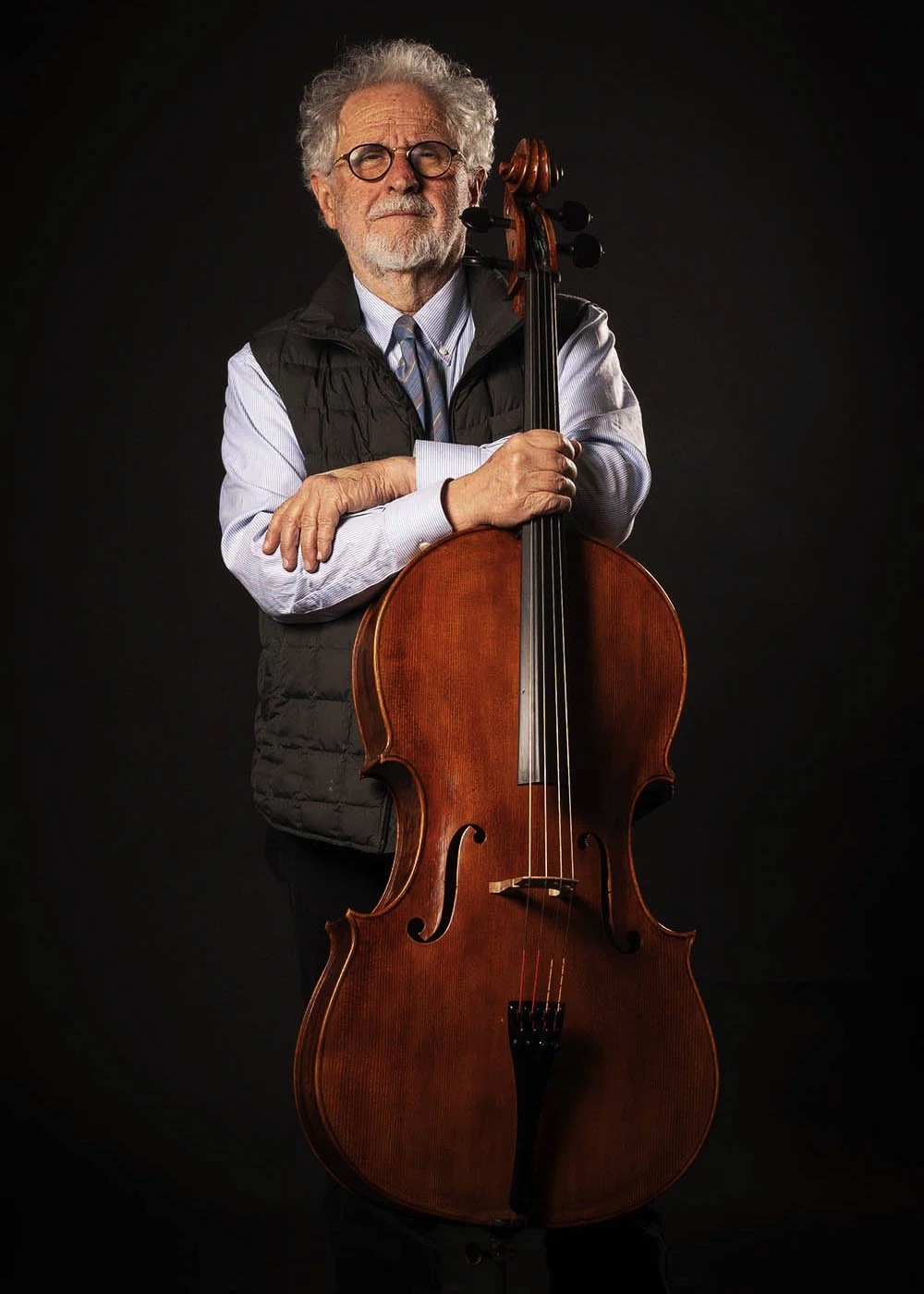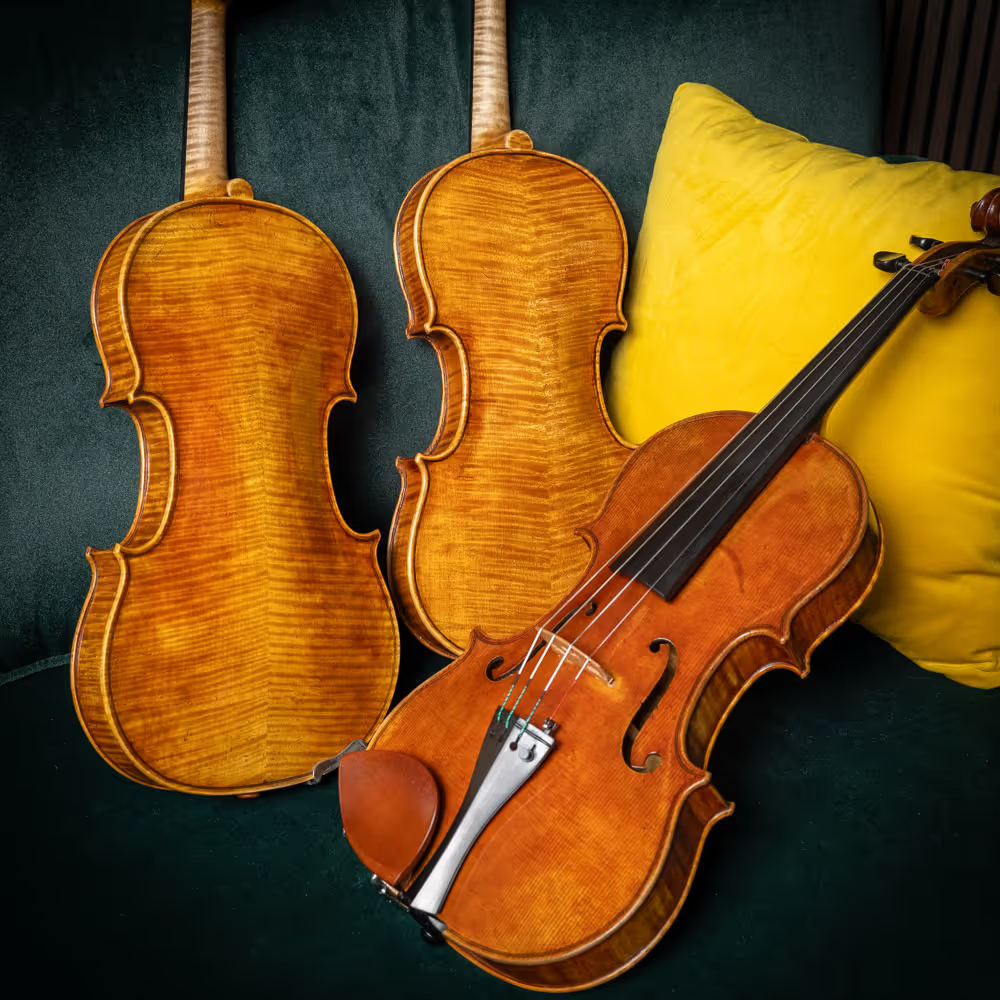
We talk to master violin maker Gregg Alf about his latest instruments, thoughts on antiquing and sound ideals.
"I don't think any of us can succeed at being better than Stradivari being himself," Gregg Alf remarks early in our recent sit-down in London. "And at the same time, we all can be certain of succeeding at being better than Stradivari at being ourselves."
It’s a powerful sentiment from a man who has spent over four decades at the pinnacle of contemporary violin making. For those who follow the world of fine instruments, the name Gregg Alf is synonymous with a specific kind of excellence; one that respects the past but refuses to be defined by it.
We recently had the pleasure of hosting Gregg at our MyLuthier showroom to welcome his latest creation, the GA263 (2025) violin. In a wide-ranging conversation, we touched on everything from the "rethinking" of antiquing to a once-in-a-lifetime discovery of 150-year-old Bosnian tone wood.

Gregg’s journey began in the 70s in Cremona. For years, he was known for his impeccable bench copies, instruments that mirrored every nick, scratch, and tonal idiosyncrasy of the Italian masters. But as his career progressed, a shift occurred.
He describes it not as a sudden break, but as a gradual "giving more of myself." While the industry often demands strict adherence to Stradivari or Guarneri models, Gregg has moved toward a more organic, personal design. He still uses the classical outlines of the masters: the GA263 is inspired by a Guarneri model; but the execution is now freehand and intuitive.
"I’m not following a template," he explains. "I’m working organically... I want to work courageously."
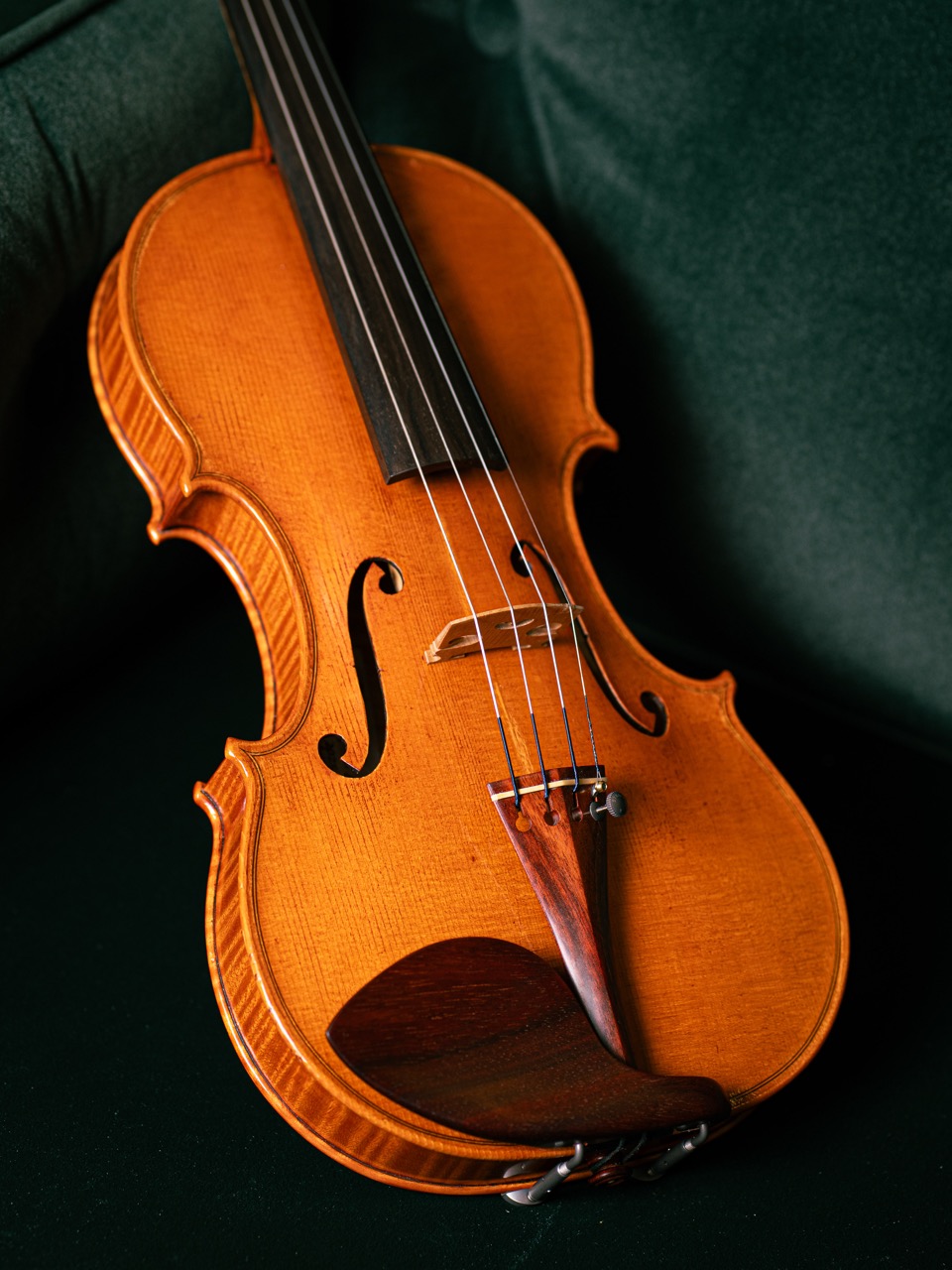
For many, "antiquing" means creating fake cracks or simulated wear. Gregg is moving in a different direction.
He views the varnish as a "visual clothing" for the instrument. Instead of artificial damage, he seeks visual complexity. He wants a surface that is rich with layers of colour and patina, allowing the instrument to look deep and interesting from day one, but without the "fake story" of a simulated accident.
The goal is to create an instrument that can age gracefully. A "perfect" new surface makes the first inevitable scratch heartbreaking. A textured, complex surface, however, invites the musician to add their own story to the wood over time.
What exactly makes a "concert violin"? For Gregg Alf, it’s about meeting the uncompromising needs of the soloist on the world’s biggest stages.
He describes his ideal acoustic as having a "laser sound": focused, direct, and capable of projecting to the back of a hall, but built upon a "warm body of sound." To achieve this consistency, Gregg blends traditional carving with modern science, using formulas to balance stiffness and weight. It’s this marriage of the subjective and the electronic that allows his instruments to feel "moldable" and responsive under the bow.
Perhaps the most exciting news from Gregg’s workshop is his recent acquisition of a rare collection of Bosnian maple cut in 1880.
Finding wood of this quality and age (nearly 150 years old) is extremely rare. Because the wood is already so naturally aged and darkened, Gregg won't need to apply the usual treatments. This find is so significant that Gregg refers to it as his "swan song": the material that will likely define the final chapter of his illustrious career.
From this wood, he plans to fulfil a long-held ambition: creating a matched quartet of instruments, treating the four separate pieces as one singular "16-string instrument."
The Gregg Alf GA263 (2025) is currently available to try at our London showroom. It is a deeply personal instrument built for the modern performer.
Watch the full interview and see the GA265 in detail here: https://youtu.be/fVvCB9myYfM
.avif)
Gregg Alf has been making at the highest level for over forty years, and you can feel that experience in every detail. This 2025 instrument takes inspiration from Guarneri del Gesù, but it's not a rigid copy. He carves the scrolls and f-holes freehand, letting the wood's natural character guide him. The varnish has this layered warmth that makes it feel like it's already been played in for decades, without the obvious antiquing. What strikes us most is the sound: there's a clear, projecting core that cuts through any space, but is wrapped in these warm, honeyed overtones that keep it from ever feeling harsh. The evenness across all four strings is exceptional. I don't have to adjust my technique when moving from the G to the E, and the responsiveness is extraordinary. The smallest shift in bow pressure or contact point opens up new colours. Alf builds with real acoustic precision, so the instrument is reliable and consistent, without ever feeling clinical or sterile. These are true concert violins, built to handle the demands of professional performance. If you're looking for the soul and depth of a historic Italian instrument with the dependability of modern making, this is as good as it gets.

Gregg Alf is an American violin maker working in London, and one of the most respected luthiers of his generation. He has been making at the highest level for over forty years, and that experience is visible in every detail of the work.
Alf trained at the Cremona Violinmaking School and went on to co-found Curtin & Alf, the partnership that did much to establish American making on the international stage. He has won multiple Violin Society of America Gold Medals and been honoured Hors Concours. He works most often from Guarneri del Gesu, though never as a rigid copy: scrolls and f-holes are carved freehand, following the character of the wood, and the varnish carries a layered warmth that reads as played-in rather than antiqued. Beyond the bench he teaches, judges competitions, and has curated exhibitions including the Messiah Stradivari showcase in Cremona and the Tokyo Stradivarius Festival.
His instruments are played by leading soloists and held in the loan collections of the Royal Academy of Music, Dextra Musica and the Amati Foundation.
Partnering with makers of this standing is the reason MyLuthier exists, and Alf sits at the top of that list. What strikes us most is the sound: a clear, projecting core that cuts through any hall, wrapped in warm, honeyed overtones that never turn harsh. The evenness across all four strings is exceptional, so there is no adjustment of technique moving from G to E, and the smallest change in bow pressure or contact point opens a new colour. He builds with real acoustic precision, which makes the instruments reliable without ever feeling clinical. If you want the depth of a historic Italian violin with the dependability of modern making, this is as good as it gets.
Pedro Silva is a cellist and one of the co-founders of MyLuthier. He graduated from the Royal Academy of Music in 2018 with a Master of Arts in cello performance, studying with Guy Johnston. He enjoys an varied freelance career as an orchestral, chamber musician and frequently collaborates with Early Music ensembles and West End productions.
Find Out Why Choosing a Modern Instrument will Kickstart your Career. Follow the Example of many Musicians who Choose a Contemporary Violin, Viola & Cello

The contemporary cello makers we rate most highly, based on instruments we have handled and sold.