
We advise owners of fine instruments and bows on existing documentation, whether further certification is worthwhile, and which recognised specialist to approach. We do not issue certificates of authenticity ourselves.
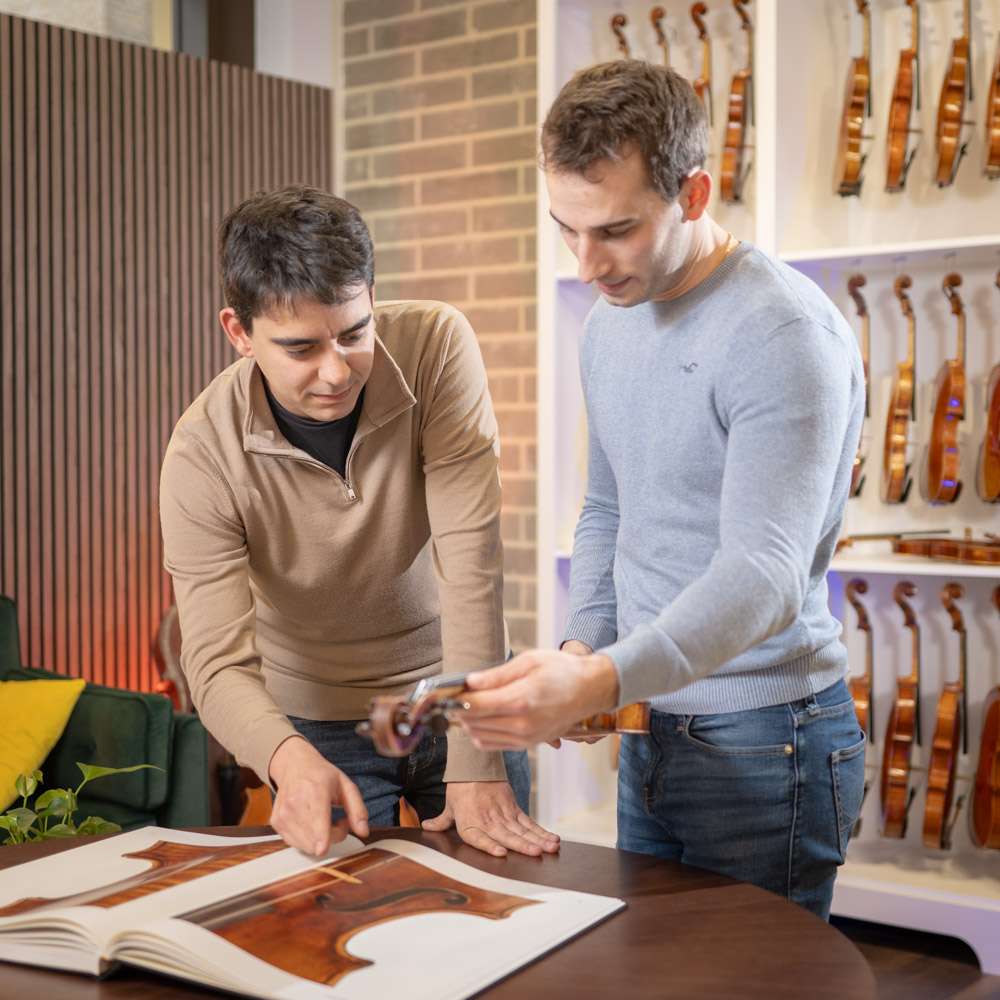
There is no single licensing body for violin expertise. A certificate is a written opinion, and its significance depends on the authority of the person who issues it. Expertise is highly specific. An authority whose opinion carries considerable weight for one maker, school or period may not be the appropriate person for another. Choosing the right expert is therefore an important part of the certification process. Approaching an unsuitable or unrecognised source can add little to an instrument's standing and, in some circumstances, make a later sale more complicated. Our role is to advise on that process before unnecessary time or expense is incurred.
This service is intended for instruments where there is a credible basis for specialist examination. A maker's label alone is not such a basis.
| Service | Fee | Notes |
|---|---|---|
| Certification advice | Quoted case by case | The expert's own fee is paid by you, direct to them |
A certificate from a source the market does not recognise may add very little, and can create questions that later need resolving. Choosing the appropriate specialist at the outset is therefore an important part of the process.
| Step | What it involves | Notes |
|---|---|---|
| Review the existing documentation | Existing paperwork | Certificates, receipts, letters, old photographs, family history |
| Assess the instrument | On the bench | Condition, past restoration and internal consistency, with imaging where it helps |
| Identify the right expert | Recognised authority by the market | Authority is specific to maker, school and period, and rarely interchangeable |
| Handle the approach | Introduction and logistics | Submission and paperwork once an opinion is given |
| Consider whether certification is worthwhile | Often the answer | Not every instrument benefits from further certification. We only undertake advisory work where there is a reasonable basis for specialist examination and where the resulting documentation could materially matter. |
We take no commission or referral fee from any expert. You pay them directly, and we have no financial interest in the outcome.
.png)
MyLuthier regularly handles fine contemporary and antique instruments where certification, provenance and previous expert opinion form an important part of their documentation and value. Our role here is not to replace the specialist authenticator, but to understand when that expertise is needed, which authority is appropriate, and how the instrument should be presented to them.
Where we arrange a referral, we remain independent of the expert's conclusion and receive no commission or referral fee.
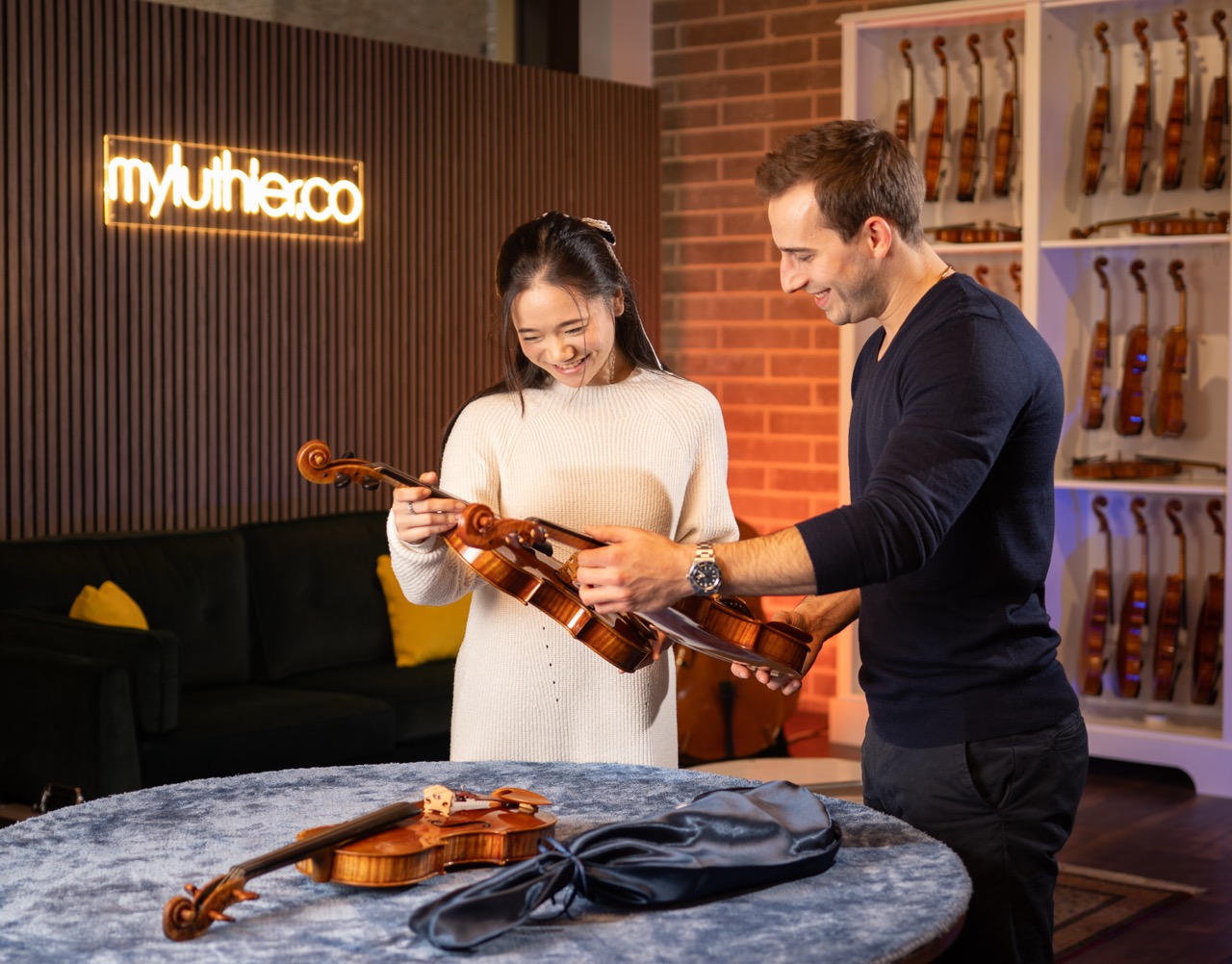
A label is one of the least reliable indicators of who made a violin.
For more than a century, workshops in Germany, France, Bohemia and elsewhere routinely produced instruments bearing facsimile labels of Stradivari, Guarneri, Amati and other celebrated makers. These instruments were generally sold openly as models or copies, and the presence of such a label does not imply that the instrument was made by the person named on it.
This does not mean that the instrument is without quality or value. Many workshop and trade instruments are very good in their own right.
Authorship is established by examining the instrument itself: its model, construction, materials, workmanship and varnish, considered alongside any reliable documentary evidence. A label alone proves very little.
If a famous label is the only indication you have of an important attribution, specialist certification is unlikely to be the appropriate first step.
The instrument is submitted to a recognised expert for that maker and period, who examines it and, if satisfied, issues a written certificate. The difficulty is knowing which expert to approach and whether it is worth doing at all. That is where we advise. We do not issue certificates ourselves.
We advise on the route to certification and handle the approach, but the opinion must come from the recognised expert for that maker, school or period. We express no view on authorship at any point.
There is no register and no licensing body, so in principle anyone can write one. In practice only a small number of names carry weight with buyers, auction houses and insurers, and authority is specific: an expert on Cremonese making has no particular standing on French bows.
Almost certainly that it is a copy, and openly sold as one. Using a famous maker's label was standard trade practice in German, French and Czech workshops for well over a century. Some of those instruments are good and worth having. The label simply is not evidence either way, and an expert looks at it last.
The expert sets their own fee, and it varies widely with the maker and the value involved. You pay them directly. We take no commission or referral fee and have no financial interest in the outcome. Our own advisory fee is quoted case by case before anything starts.
Weeks to months, and it depends entirely on the expert. Some see instruments in person only at particular times of year, and some are booked well ahead. We will give you a realistic expectation before you commit to anything.
No. A condition report documents an instrument's physical state and expresses no view on who made it.
An expert's conclusion may differ from the label, an earlier certificate or what you were told when you bought the instrument. We cannot guarantee the outcome of a referral, and our advice is independent of the conclusion reached.
We are happy to review initial photographs, but this service is intended for instruments and bows where there is a credible reason to believe formal certification may have material value. In many cases we can establish from the information provided that specialist certification would not be proportionate, and we will tell you that before any paid work begins.